

Monitor Run
Overview
In Sifflet, you can run monitors manually or automatically based on a defined Schedule. You can combine both approaches, for example by using a predefined schedule as the main solution and triggering manual runs on demand.
How To
Run Overview
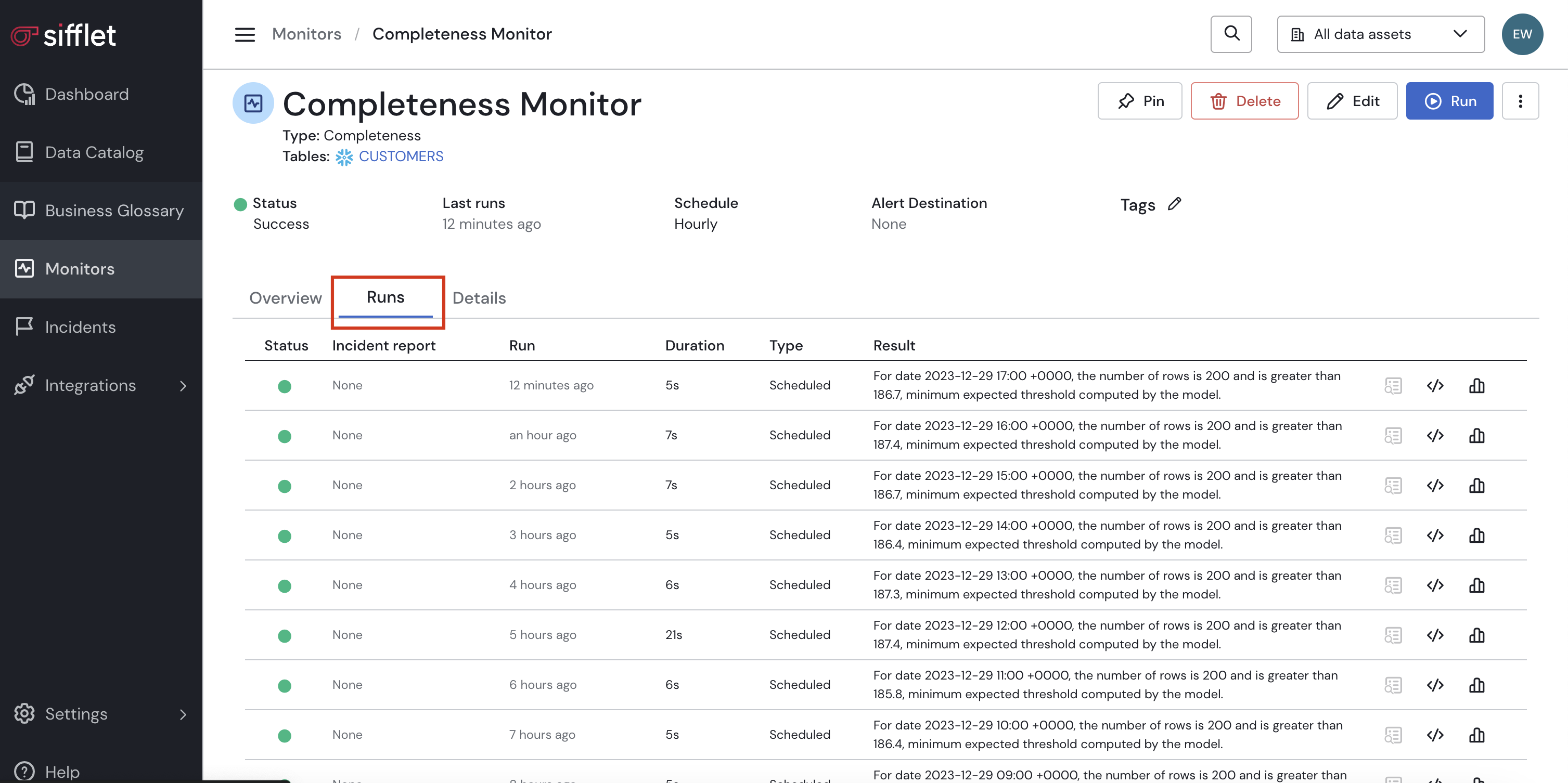
To see an overview of all previous and active runs of your monitor, go to the Runs tab on the Monitor Details Page.
Scheduled Run
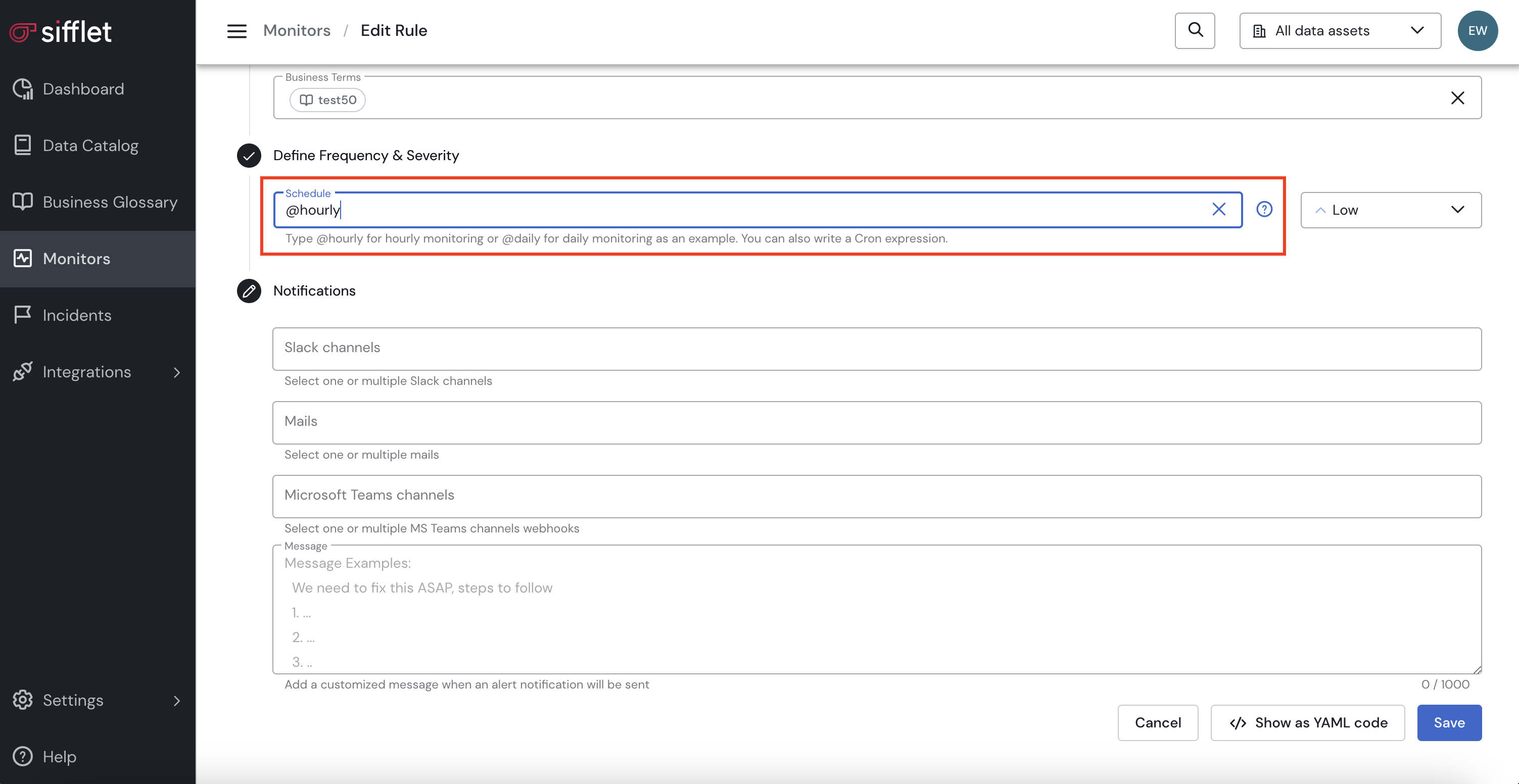
In most cases, defining a regular Run Schedule for monitors is the recommended approach. You can change the schedule at any time.
Manual Run
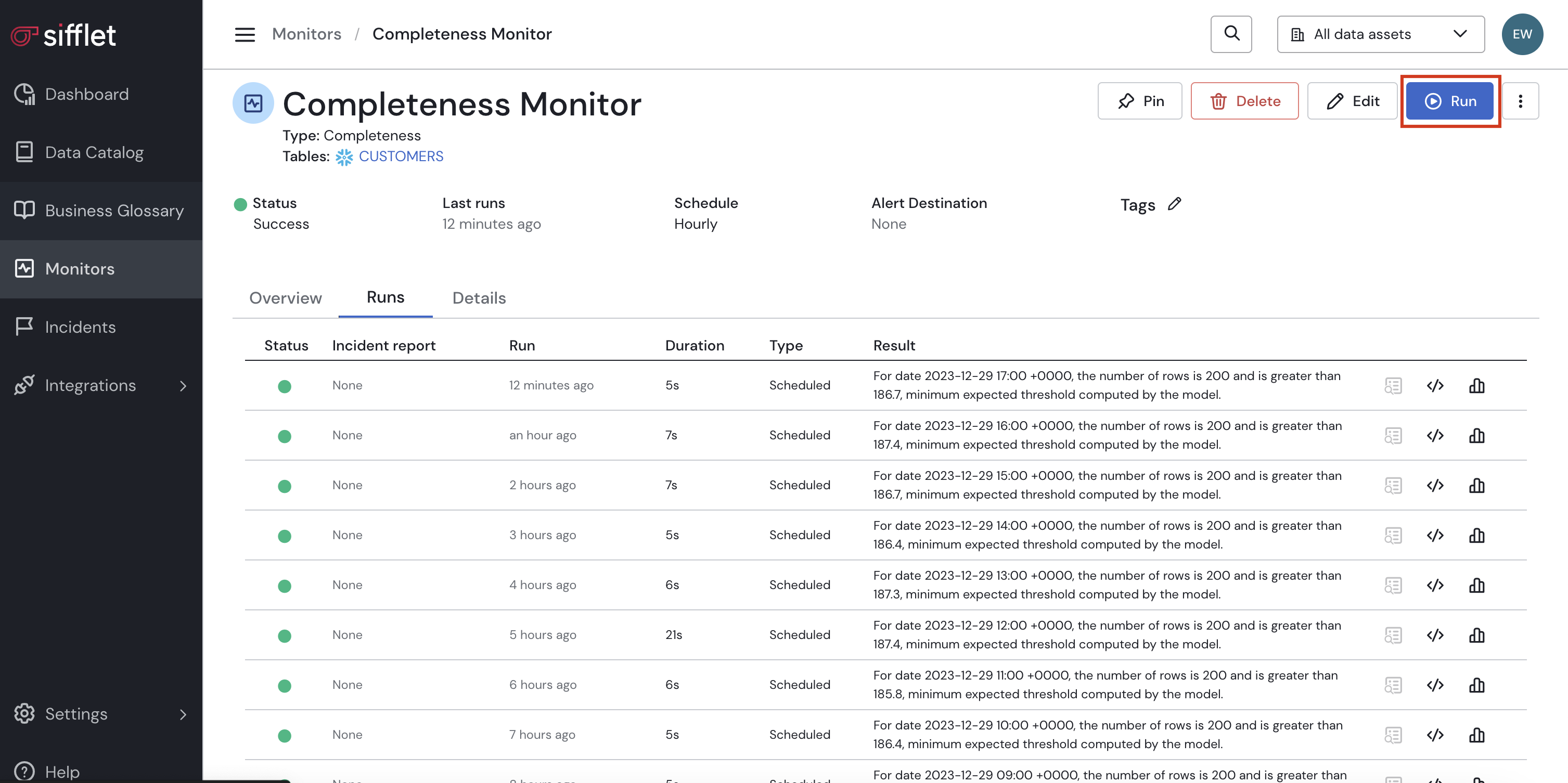
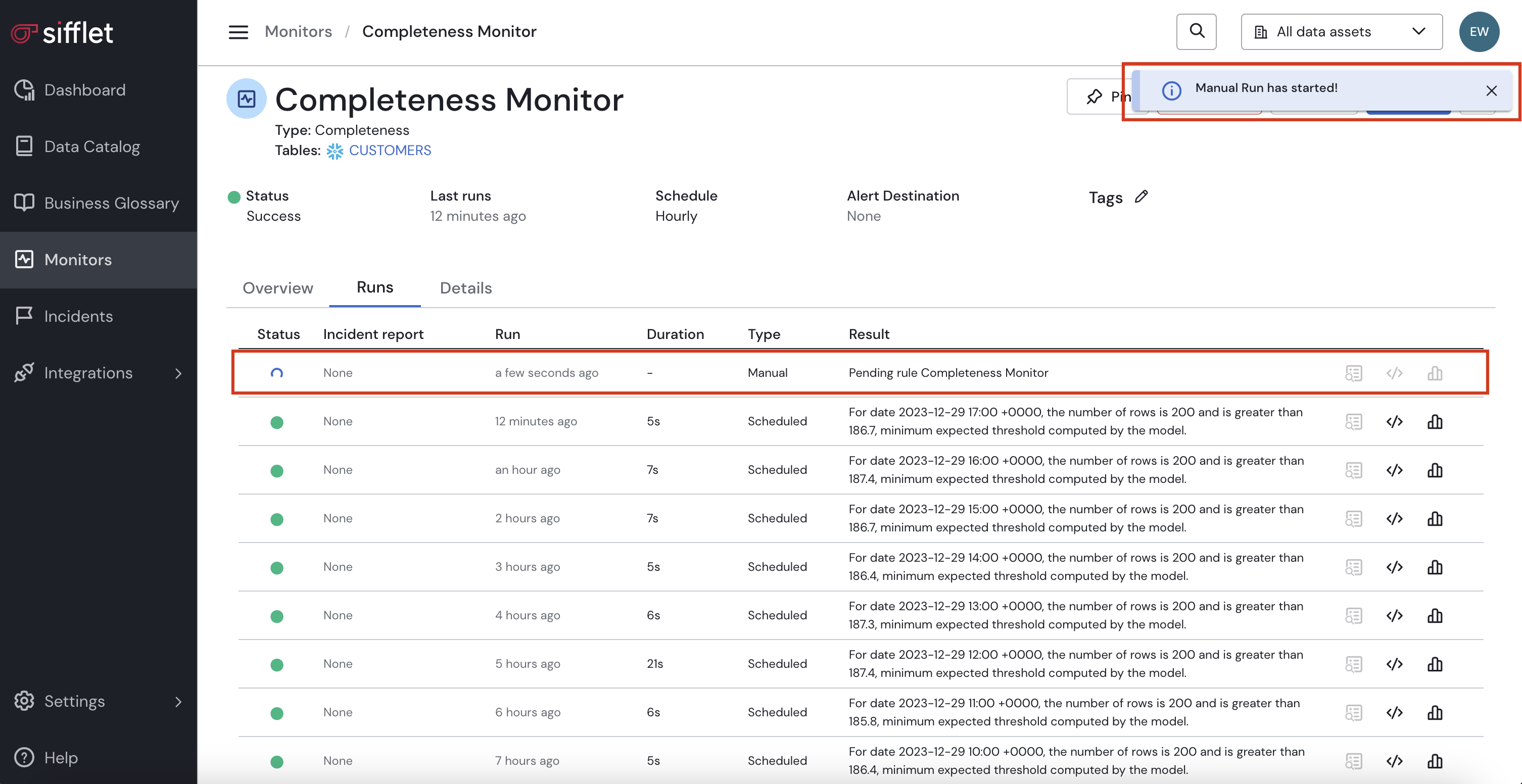
To trigger a monitor run manually, go to the Monitor Details Page and click Run in the top-right corner. Then go to the Runs tab to watch the job status (a new job appears at the top of the list). Depending on the monitor, the run takes from a few seconds to a few minutes.
Debugging Runs
SQL Comments
SQL queries that Sifflet issues include leading comments to help you debug them.
{
  "app": "Sifflet",
  "query_context_type": "MONITOR_SCHEDULED",
  "rule_id": "884acded-f852-4150-824a-09c62ece2b30",
  "rule_run_id": "e70d3696-ccc1-409e-a415-741f60b2f2eb",
  "rule_template_name": "SiffletNullRule",
  "rule_params": "{\"hasWhereStatement\": false, \"hasTimeWindow\": false, \"nullValues\": \"NULL\", \"datasetFieldName\": \"CATEGORY_WORDS\", \"threshold\": 0, \"hasGroupBy\": false, \"isPartitionQuery\": false}"
}app: Always Sifflet
query_context_type:
MONITOR_DRY_RUN: Test run issued from a monitor configuration page.MONITOR_SCHEDULED: Scheduled monitor runs.MONITOR_MANUAL: Manual monitor runs.
rule_id not available in test runs: ID of the rule that ran the query
You can use rule IDs to find the monitor in Sifflet: https://<tenant>.siffletdata.com/monitors/rule/<rule_id>/overview
rule_template_name: The type of Sifflet rule. See Monitors as Code for a full list of values and types they match.
rule_params: a JSON containing the list of parameters representing the monitor configuration. See Monitors as Code for the full parameter reference.
Updated 14 days ago